

VICE-PRESIDENTIAL CANDIDATE
◯
9. SOTTO, VICENTE TITO
NATIONALIST PEOPLE'S COALITION
Tito Sotto, 73, the incumbent Senate president, has served in Congress for almost two decades and has authored over 100 laws.
He has often been tagged as a conservative lawmaker, largely because he continues to block the passage of the SOGIE Equality Bill in the Senate, claiming that some of its provisions trample on religious and academic freedom as well as women’s rights.
He also opposed the Reproductive Health Law when it was still being debated in the upper chamber but has since clarified that he has no issue with the enacted law which, unlike the Senate bill, does not permit abortion, population control and abortifacients.
Although Sotto, along with his running-mate Sen. Panfilo Lacson, is running as an alternative to the Duterte administration who will restore trust in the government, the Senate under his leadership has generally legislated according to the incumbent president’s agenda.
Sotto is the principal author of the controversial Anti-Terrorism Act of 2020 and has long supported the administration’s bloody campaign against illegal drugs which he vows to improve by employing a “holistic approach” if elected.
Several other members of Sotto's family are making bids for public office. His son Gian Sotto and his nephew Vico Sotto are both seeking reelection as vice mayor of Quezon City and mayor of Pasig CIty, respectively. Nina Sotto, the Senate president's niece-in-law, is running to replace her husband Wahoo Sotto as Parañaque 2nd District councilor.

Platform and Policy
The candidate's top priorities if elected to office, tracked against previous promises and accomplishments, if any
Select a policy profile below to view more details
Anti-illegal drug campaign
Anti-insurgency
Budget reform
Related Policy Proposal:
Continue the Duterte administration's campaign against illegal drugs but with a “holistic approach” that includes prevention and rehabilitation
Continue the Duterte administration's campaign against illegal drugs but with a “holistic approach” that includes prevention and rehabilitation
Previous Platform:
Track Record / Accomplishment; Date:
- Authored and principally sponsored the Dangerous Drugs Act of 2002, the law that created the Philippine Drug Enforcement Agency
- Led the Dangerous Drugs Board as chairman from 2008 to 2009
- Supported the Duterte administration’s bloody campaign against illegal drugs
Deviation from Previous Platform:
After years of supporting the administration’s anti-drug campaign, Sotto now says that while the program has not failed it is “not complete”
After years of supporting the administration’s anti-drug campaign, Sotto now says that while the program has not failed it is “not complete”
Related Policy Proposal:
Supports the National Task Force to End Local Communist Armed Conflict but says its officials who make "irresponsible" statements should be dismissed.
Supports the National Task Force to End Local Communist Armed Conflict but says its officials who make "irresponsible" statements should be dismissed.
Previous Platform:
Track Record / Accomplishment; Date:
- Principally authored the Anti-Terrorism Act of 2020
- Opposed defunding the National Task Force to End Local Communist Armed Conflict despite calls from several colleagues to do so in April 2021
Deviation from Previous Platform:
The Senate under his leadership tried to slash the NTF-ELCAC's budget from the proposed P28 billion to P4 billion.
Sotto said at the time that his issue with the task force was its inability to account for its spending.
The chamber eventually had to bump the task force's funds back up to P17 billion in order to reach a compromise with the House of Representatives.
The Senate under his leadership tried to slash the NTF-ELCAC's budget from the proposed P28 billion to P4 billion.
Sotto said at the time that his issue with the task force was its inability to account for its spending.
The chamber eventually had to bump the task force's funds back up to P17 billion in order to reach a compromise with the House of Representatives.
Related Policy Proposal:
Supports Lacson's proposed Senate Bill No.23 or the proposed Budget Reform for Village Empowerment (BRAVE) Act. The bill seeks to establish an annual Local Development Fund to assist local government units implement three-year development plans.
Supports Lacson's proposed Senate Bill No.23 or the proposed Budget Reform for Village Empowerment (BRAVE) Act. The bill seeks to establish an annual Local Development Fund to assist local government units implement three-year development plans.
Previous Platform:
Track Record / Accomplishment; Date:
Deviation from Previous Platform:
Major Accomplishments
The candidate's top five accomplishments and contributions for the last 15 years or so
Public OfficeIn the 18th Congress alone, Sotto authored at least 12 laws including the pandemic relief and stimulus measures known as Bayanihan I and II.
He is also the principal author of the Anti-Terrorism Act of 2020, a controversial law that 37 groups of petitioners asked the Supreme Court to strike down over its alleged draconian provisions, including those allowing sweeping powers to the Anti-Terrorism Council, vague definitions of terrorism that critics say impede on basic freedoms, as well as prolonged detention even for those arrested without a warrant.
The high court has upheld most of the law, a decision Sotto hailed as a supposed win over terrorists. Two Aeta farmers were the first to be charged under the law for alleged violation of Section 4. They were detained for a year before a court ruled that prosecution evidence was insufficient.
Sotto has had a complicated relationship with the media. On the one hand, he authored R.A. No. 11458, expanding protections for media practitioners under Republic Act No. 53, also known as the Press Freedom Law which was authored by his grandfather Vicente Sotto. The amendments passed by the younger Sotto allowed broadcast and online journalists to enjoy the same right as print reporters to keep their sources confidential. However, Sotto also inserted a last-minute provision criminalizing cyber libel in the Cybercrime Act of 2012. He did this shortly after claiming he was being "cyberbullied' because he was drawing flak online for allegedly plagiarizing several people, including the late US Sen. Robert Kennedy, in a speech he made opposing what was then the Reproductive Health Bill. Sotto had warned his critics to be wary of the cybercrime law, the cyber libel provision of which has been assailed by media practitioners as a tool used by the Duterte administration to curtail press freedom and punish critics including Rappler CEO Maria Ressa, a Nobel Peace Prize laureate. The government denies this and maintains that the cases against Ressa were filed by private citizens. In June 2018, Sotto asked Inquirer.net to take down several stories that tagged him in the controversial rape case of actress Pepsi Paloma. Less than a month later, the articles were inaccessible on Inquirer's news site, with the outlet explaining in a statement that they were being reviewed. The stories have not gone back up since.
R.A. 11469 or the Bayanihan to Heal as One Act of 2020
Read More
Position/Date
Principal author in the Senate, 2020
Principal author in the Senate, 2020
Status
Signed into law on Mar. 24, 2020
Signed into law on Mar. 24, 2020
R.A. 11509 or the Doktor Para sa Bayan Act
Read More
Position/Date
Principal author in the Senate, 2020
Principal author in the Senate, 2020
Status
Signed into law on Dec. 23, 2020
Signed into law on Dec. 23, 2020
R.A. 11594 or An Act Increasing the Penalties for Perjury
Read More
Amending for the Purpose Articles 183 And184 of Act No. 3815, as Amended, Otherwise Known as “The Revised Penal Code”
Position/Date
Principal author in the Senate, 2020
Principal author in the Senate, 2020
Status
Signed into law on on Oct. 29, 2021
Signed into law on on Oct. 29, 2021
R.A. 11479 or the Anti-Terrorism Act of 2020
Read More
Position/Date
Principal author in the Senate, 2019
Principal author in the Senate, 2019
Status
Signed into law on July 3, 2020
Signed into law on July 3, 2020
R.A. 11036 or thePhilippine Mental Health Act of 2017
Read More
Position/Date
Principal author in the Senate, 2017
Principal author in the Senate, 2017
Status
Signed into law on Aug. 1, 2018
Signed into law on Aug. 1, 2018
Actions and/or Proceedings
Actions and/or proceedings pending against or resolved in courts or tribunals involving the candidate, based on publicly available information
There is no publicly available information on this matter at this time. Requested information from the candidate was not provided.
Statement of Assets, Liabilities and Net Worth
Also known as SALN, this document is a declaration of one's personal finances. Philippine Law requires the SALN to be submitted by all public officials and employees to the Ombudsman. Public officials and employees may opt to voluntarily disclose their SALN to the public.
Assets
P351.9 million
Liabilities
P266.3 million
Net Worth
P85.6 million
* As of Dec. 31, 2020
Campaign Details
Key details about the candidate's campaign
Campaign Manager:
Ronnie Puno
Alliances and Endorsements:
Running mate of Panfilo "Ping" Lacson in 2022 elections
Party History:
Nationalist People’s Coalition
(chairman)
Major Donors
Candidate's major donors and campaign funding sources
There is no publicly available information on this matter at this time. Requested information from the candidate was not provided.
Major Advocacies
The candidate's top advocacies in the last 15 years or so
Anti-SOGIE Bill
Anti-Reproductive Health Bill
Anti-death penalty
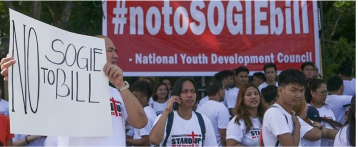
Anti-SOGIE Bill
Position/Date
Since at least 2017
Since at least 2017
Status
Blocked the passage of the SOGIE Equality Bill in the Senate, claiming certain provisions run contrary to religious and academic freedom as well as equal rights.
The 18th Congress under Sotto’s leadership will adjourn without passing the SOGIE bill.
The House of Representatives unanimously approved its own version of the bill as early as 2017.
Blocked the passage of the SOGIE Equality Bill in the Senate, claiming certain provisions run contrary to religious and academic freedom as well as equal rights.
The 18th Congress under Sotto’s leadership will adjourn without passing the SOGIE bill.
The House of Representatives unanimously approved its own version of the bill as early as 2017.

Shifted stance on Reproductive Health Law / Anti-Reproductive Health Bill
Staunchly opposed the Reproductive Health Bill when it was being debated at the Senate from
Position/Date
- Senator
- Senator
Status
Years after the bill’s enactment, Sotto said he has no issue with the final version of the law because, unlike the Senate bill, it does not permit abortion, population control and abortifacients.
Years after the bill’s enactment, Sotto said he has no issue with the final version of the law because, unlike the Senate bill, it does not permit abortion, population control and abortifacients.
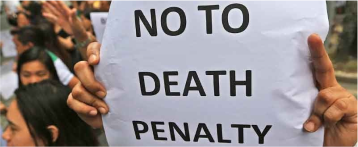
Anti-death penalty
Sotto in 2021 reversed his decades-long support for the reinstatement of death penalty, claiming to have arrived at a better solution: life imprisonment in high-level penitentiaries
Position/Date
2022 - As vice presidential candidate
2022 - As vice presidential candidate
Status
Proposing the creation of regional penitentiaries for those convicted of high-level drug trafficking and heinous crimes.
Proposing the creation of regional penitentiaries for those convicted of high-level drug trafficking and heinous crimes.
Personal Details
Basic information on the candidate's family, background and work experience
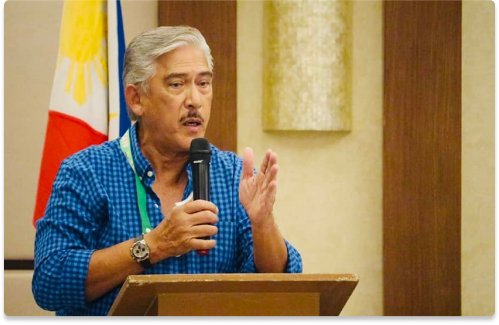
Name to appear on the ballot: Vicente “Tito” Castelo Sotto III
Full Name: Vicente “Tito” Castelo Sotto III
Birthdate: August 24, years old as of election day)
Birthplace: Manila
Residence:
Religion: Catholic
Languages Spoken: Filipino, English
Parents:
Marcelino Antonio Ojeda Sotto; father
Dr. Herminia Castelo Sotto; mother
Marcelino Antonio Ojeda Sotto; father
Dr. Herminia Castelo Sotto; mother
Siblings:
Valmar Castelo Sotto; actor, host, comedian
Marvic Valentin Castelo Sotto; singer and composer
Valmar Castelo Sotto; actor, host, comedian
Marvic Valentin Castelo Sotto; singer and composer
Marital Status: Helen Gamboa Sotto
Children:
Romina Frances Sotto
Diorella Maria Sotto
Gian Carlo Sotto
Ciara Anna Sotto
Romina Frances Sotto
Diorella Maria Sotto
Gian Carlo Sotto
Ciara Anna Sotto
Education:
•Executive Program for Leaders in Development at the Harvard University John F. Kennedy School of Government that he completed in June 2000
•AB English, Colegio de San Juan de Letran
Work Experience:
•Senate President (2018-present)
•Senate Majority Floor Leader ()
•Senator ()
•Senate Majority Floor Leader ()
•Dangerous Drugs Board chairman ()
•Senator ()
•Senator ()
Appendix
Learn more about this candidate
Major Accomplishments
Other Legislative and Executive Accomplishments
R.A. No. 11494, or the Bayanihan to Recover as One Act
Read More
Position/Date
Author, 2020
Author, 2020
Status
Approved by the president on Sept. 11, 2020
Approved by the president on Sept. 11, 2020
R.A. No. 11199, or the Social Security Act of 2018
Read More
Position/Date
Author and principal sponsor, 2002
Author and principal sponsor, 2002
Status
Approved by the president on Feb. 7, 2019
Approved by the president on Feb. 7, 2019
R.A. No. 11053, or the Anti-Hazing Act of 2018
Read More
Position/Date
Principal author, 2016
Principal author, 2016
Status
Approved by the president on June 29, 2018
Approved by the president on June 29, 2018
R.A. No. 9165, or the Comprehensive Dangerous Drugs Act of 2002
Read More
Author and principal sponsor, 2002
Position/Date
Approved by the president on June 7, 2002
Approved by the president on June 7, 2002
Status
R.A. No. 11458
Read More
An Act Expanding the Coverage ofExemptions From Revealing the Source of Published News or Information Obtained in Confidence by Including Journalists From Broadcast, and News Agencies,
Position/Date
Principal author, 2016
Principal author, 2016
Status
Approved by the president on June 30, 2019
Approved by the president on June 30, 2019

Vote Pilipinas supports the implementation of Freedom of Information in the Philippines. Access information from the Philippine government via foi.gov.ph

